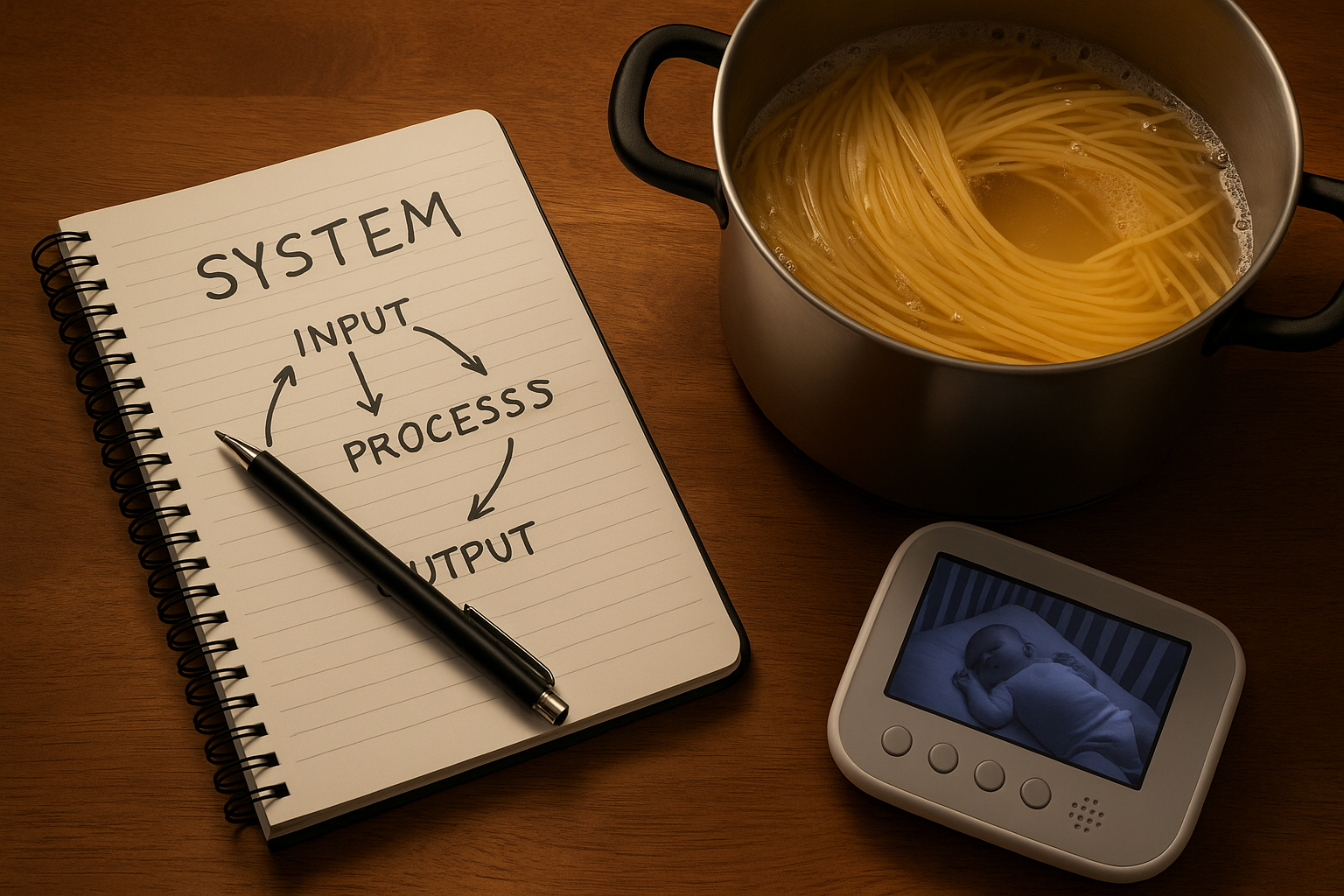
I used to think systems thinking was just for software.
Dependency graphs, input/output, feedback loops, all that neat mental architecture we use to design clean, resilient code. But lately, I’ve started seeing it everywhere. In how I raise my kids. In how I boil pasta. In how I manage mornings without losing my mind.
Take bedtime with my son. Some nights it’s smooth. Other nights it’s a slow collapse of logic: hunger, then bouncing, then tears, then bottle refusal. I used to react, fix each piece as it broke. Now, I step back. What changed upstream? Was he overstimulated? Did we skip the quiet time buffer? Systems thinking teaches me: don’t debug the failure, debug the flow.
Same in code. When something breaks in PHP, I’ve learned not to fix the symptom first. Instead, I follow the signal. What’s feeding this function? Where’s the state leaking in? Is the architecture brittle, or is this just bad input? If the system is behaving badly, it’s usually because it’s been nudged off balance, not because it’s broken.
And pasta? Honestly, it’s the same. You don’t just throw it in boiling water and forget it. You adjust based on humidity, flame strength, the shape of the noodles. You taste, wait, stir, you listen. It’s not a recipe, it’s a conversation.
Everything becomes a loop: input, feedback, adjustment.
That’s the thread. Whether it’s code or cooking or calming a toddler at 8:47 PM, the mindset is the same: Iterate gently. Respond to signals. Respect the constraints.
Because rushing always leads to overcorrection. And ignoring signals, in parenting or PHP, means you’ll fix the same thing over and over.
The more I practice this, the more I trust slow noticing over quick fixes. And the more I notice how connected everything is.
Debugging isn’t just for code. It’s how I live now. One signal at a time.