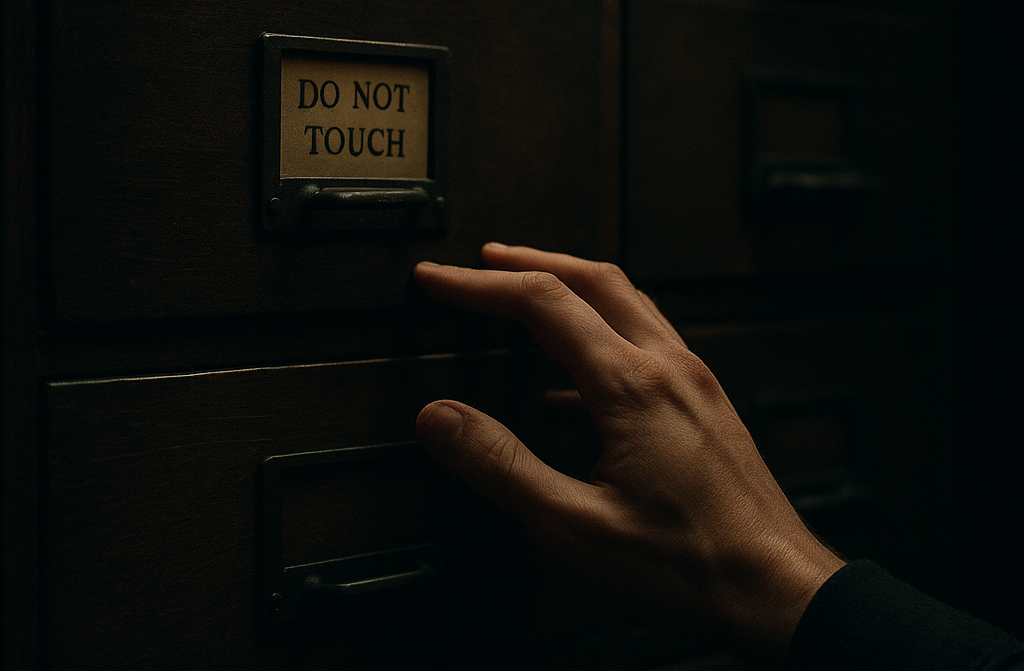
You know the file I mean. That one. The one everyone sidesteps in meetings, with names like legacy_utils.php or v2_hackfix_backup_FINAL_v5_REAL.php. The one that’s always “outside scope,” “due for a rewrite,” or, my favorite, “stable, so let’s not touch it.”
Funny thing is, it’s not the code that scares us. It’s the echoes.
Open it, and you don’t just see functions, you see fingerprints. A quiet panic commit from 2016. A block of commented-out code labeled “don’t delete (trust me).” A TODO that’s basically a cry for help.
And you feel it, the rush of deadlines, the tradeoffs, the meetings that ended in compromises instead of clean design. There’s history in those files. Not the polished kind. The lived-in kind.
We treat that file like a haunted house. Better to build around it than go inside. Because if you go inside, you might find out you’re not just dealing with code. You’re dealing with culture. Decisions made when three people shared one role. A feature added during a layoff. A workaround that became the foundation.
And if we’re honest, some part of us fears becoming part of the story. Adding our own kludge to the pile. Making it worse. Or worse, fixing it, and watching the fix break something nobody documented.
But there’s something sacred in going in anyway.
One quiet afternoon, you crack it open. Not to judge. Not to rewrite the universe. Just to see.
You read, you test, you rename a variable that’s been bothering you for years. And something shifts. That file loses a bit of its mystery. You see the thread, finally, of what someone meant to do. You refactor one part, and suddenly the whole thing exhales.
It’s not glamorous work. Nobody claps when you make a ghost file readable. But you know. And the next person will know.
There’s a kind of quiet courage in touching something everyone tiptoed around. It doesn’t feel like a big moment, just a small, calm choice to clean up someone else’s mess without resentment. Almost like care.
And care, I think, is what all legacy code is really waiting for.