You know that moment when you’ve tried everything, and the system still won’t budge?
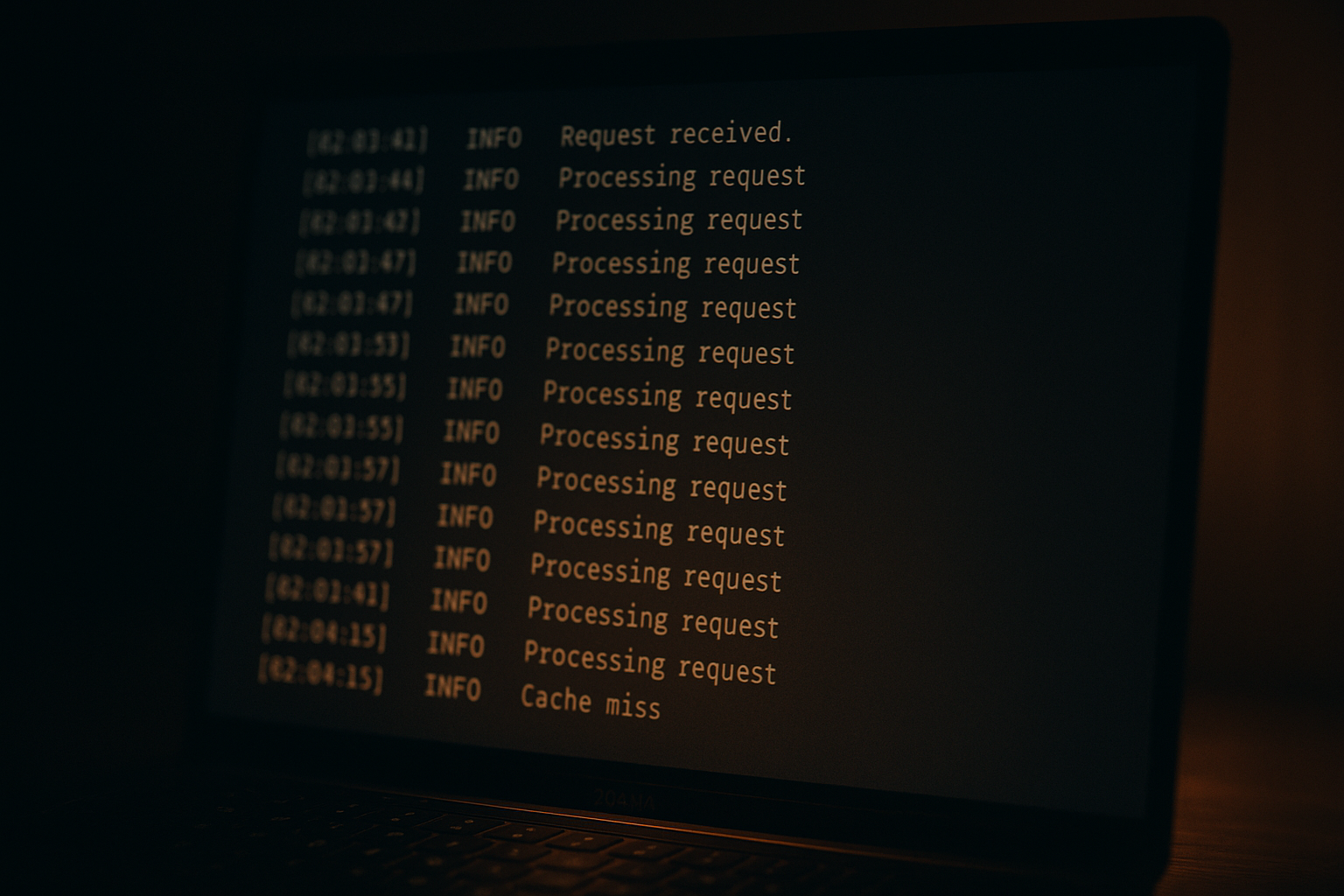
It was 2:04 a.m. The kind of hour when even your thoughts start echoing back at you. I wasn’t supposed to still be working, I had told myself I’d give it thirty more minutes. That was two hours ago. But there I was, staring at the same log line for the fifth time, hoping it would blink first.
Nothing made sense. The endpoint was clean, the parameters correct, the response mock was right there in the test suite, green as spring. And yet, in production, it was failing silently. No errors, just absence. Like a note not played.
I had already thrown everything at it. Dumps, var_export, Log::debug() with increasingly desperate messages like “HOW is this null?” or “WHERE is this breaking?”. I was hunting for noise. But it hit me, maybe I should listen for silence.
So I stopped. Just sat back, hands off the keyboard, and reread the log like I wasn’t trying to fix anything. Just… observing.
That’s when I noticed it. A timestamp off by three seconds, not enough to trip alarms, but enough to shift the logic of a cached call. The request wasn’t failing. It was being skipped. Quietly. Because three seconds ago, a similar request had just barely made it into the cache.
I didn’t feel victorious. I felt like I’d just heard the system whisper something it had been saying all along, but I was too loud to hear it.
Funny how often that happens outside of code too. With people. With kids. With your own body. We push, interrogate, escalate, but the insight comes only when we pause. When we stop needing an answer and start listening to what’s already there.
It wasn’t a brilliant solution. I added a cache bypass flag. Logged the actual cache decision path. Made a note to revisit the default expiry. But the real fix wasn’t in the code.
It was in how I showed up to it.
Sometimes, a log at 2 a.m. isn’t just a log. It’s a mirror.